Condo Living
Soundproof Flooring for Condos: What Helps Most
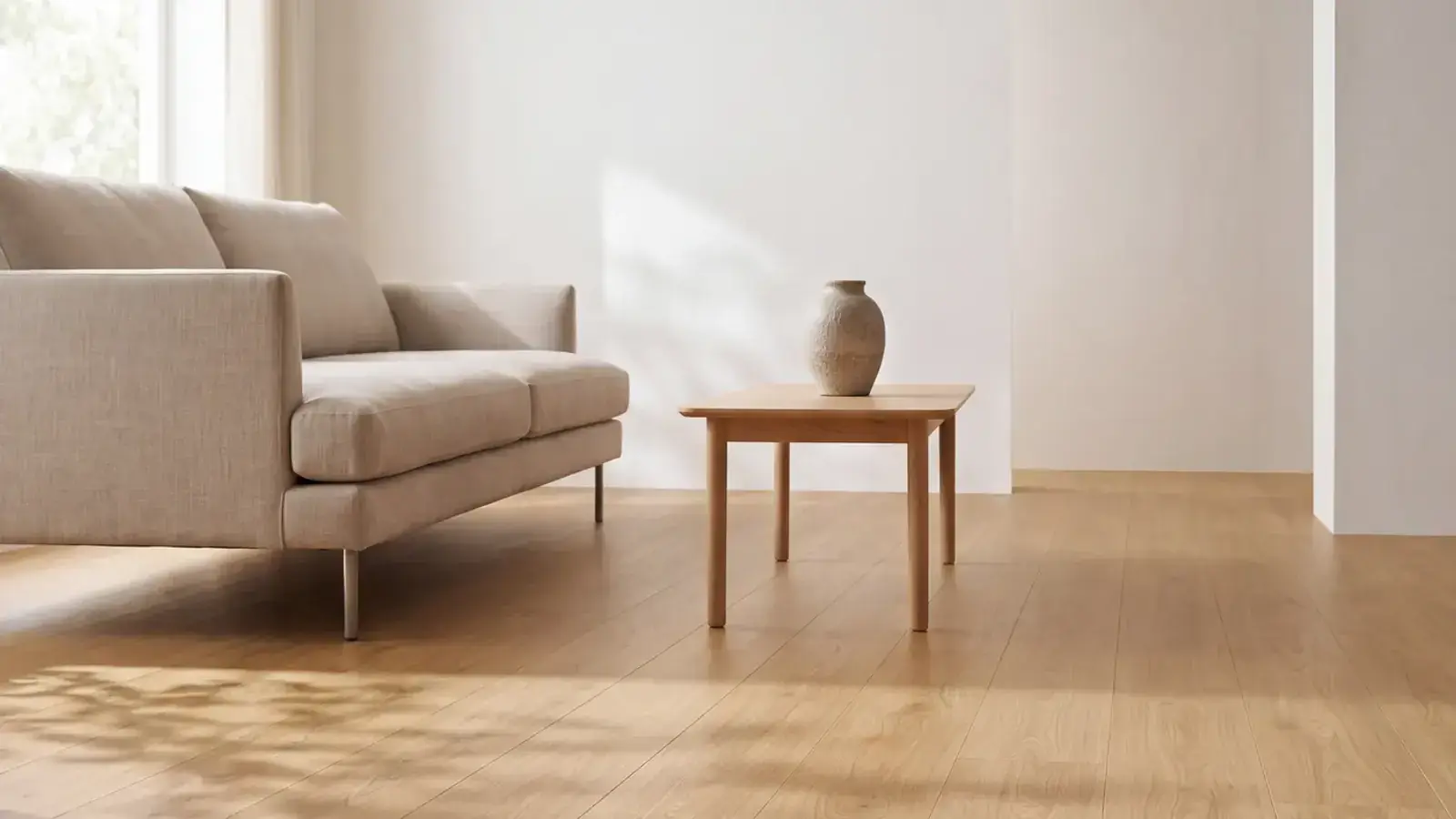
No flooring makes a condo soundproof. What you can change is how much impact noise reaches the suite below, and that comes down to the plank, the layer under it and how the two are fixed to the slab. Dense underlay does more than plank thickness. Rugs and felt pads finish the job.
Two kinds of noise, and who hears each one
Impact noise is the thud that travels down through the slab: heels, a dropped bowl, a dog landing off the sofa. It is the noise the neighbour below hears, and the reason a Toronto condo corporation has a flooring rule at all. In Ontario that rule sits in the corporation's own declaration, by-laws and rules, so it is the building you answer to, not the city.
The second kind stays with you. A hollow click under the plank, or an echo in a room with bare walls and no rug, is about what sits under your floor and what is in the room, not about what the neighbour hears. A floor can improve one and leave the other alone, so decide which one you are solving before you shop. How footsteps travel in a tower covers the first problem in a lakefront building.
Which flooring is quietest in a condo?
The quietest result comes from the whole assembly rather than the plank on its own. Three things move it: mass, a resilient layer that absorbs the strike, and as few air gaps as possible between the floor and the concrete. That holds in a North York tower and a Humber Bay one alike, because the slab under both carries a footstep the same way.
That is why the same plank can satisfy one building on a dense underlay and fall short in the next on thin foam. No product number tells you what your finished floor will do, because any acoustic rating belongs to the assembly it was tested on: slab, underlay and plank together. Ask your corporation what it accepts, in writing, and whether it wants a test document with the application. Floorrable confirms that requirement before material is ordered.
| Floor and install | For the suite below | In your own room |
|---|---|---|
| Carpet over a pad | Absorbs the strike where it lands | Quietest underfoot, hardest to keep clean |
| SPC vinyl floating with an attached pad | The pad takes part of the strike, the plank is dense | Firmer and cooler, little hollow sound |
| Laminate floating on thin foam | The least help of the hard floors | The most hollow click underfoot |
| Laminate or vinyl on a dense acoustic underlay | Better than foam under the same plank | Quieter, and less drummy in an empty room |
| Engineered hardwood glued to the slab | Strike still passes down, no pad to soften it | Solid and quiet, with no cavity to drum |
Carpet is the quietest floor in a condo. Once it is coming up, every option below it is a comparison between hard floors.
That is the comparison worth making. Swapping carpet for any hard floor sends more sound into the slab, which is what a flooring rule exists to limit, so the useful question is never whether the new floor is louder than the carpet. It is which hard floor, on which underlay, your building will approve and your neighbour will live with.
Is vinyl quieter than laminate?
Usually yes, and the reason sits in the core and the pad rather than the category. An SPC core is stone and polymer, so it is denser and stiffer than laminate's fibreboard, and the SPC vinyl plank floors in the Marina Collection carry an attached pad that lies against the slab.
AC4 laminate floors float on whatever goes down first, so laminate swings the furthest of the hard floors: hollow and sharp on the thin foam sold with a budget kit, much calmer on a dense acoustic sheet. Put laminate on the underlay your building accepts and the audible gap between the two materials narrows a long way.
Flatness matters as much as the material. A plank bridging a dip in the slab flexes and knocks every time somebody walks over it, which sounds like a cheap floor and is really a prep problem.
Does glue-down flooring reduce noise?
For the sound in your own suite, yes. Gluing the plank to the slab removes the air cavity a floating floor drums against, so footsteps land with a solid note instead of a click. Glue-down wants a flat, dry, clean slab and a product rated for the method, which makes it a decision at the measurement rather than in the showroom. Floorrable's engineered and hybrid lines are nailed or glued down, while the SPC and laminate lines float.
For the neighbour below, glue-down is not automatically better. The strike still passes into the concrete, and the resilient layer that would have absorbed part of it is gone, so ask whether your building's rule expects an acoustic membrane under a glued floor as well.
What you can change without replacing the floor
- A rug with a dense pad along the main walkway, where the heel strikes land hardest.
- Felt pads under every chair and table leg, and a mat inside the door for grit.
- Shoes off indoors, which takes the strike out at the source rather than muffling it later.
- A hollow patch in one area of an existing floor is usually a dip in the slab underneath, so it is a levelling job, not a product fault.
None of this replaces an underlay the building accepts, and none of it rescues a floor that went in without approval. It does help where the complaint is one room, one walkway or one chair.
What to do before you order a quiet floor
- Ask the property manager for the flooring rule in writing, and for the underlay the building will accept.
- Shortlist the floors that meet it, then compare them with the underlay you will actually use under them, not the loose sample on a showroom shelf.
- Check what the rule says about bedrooms, hallways and the kitchen, because a corporation can treat them differently.
- Once the rule is in hand, get a price range for your unit, and the free measurement turns it into a firm price before anything is ordered.
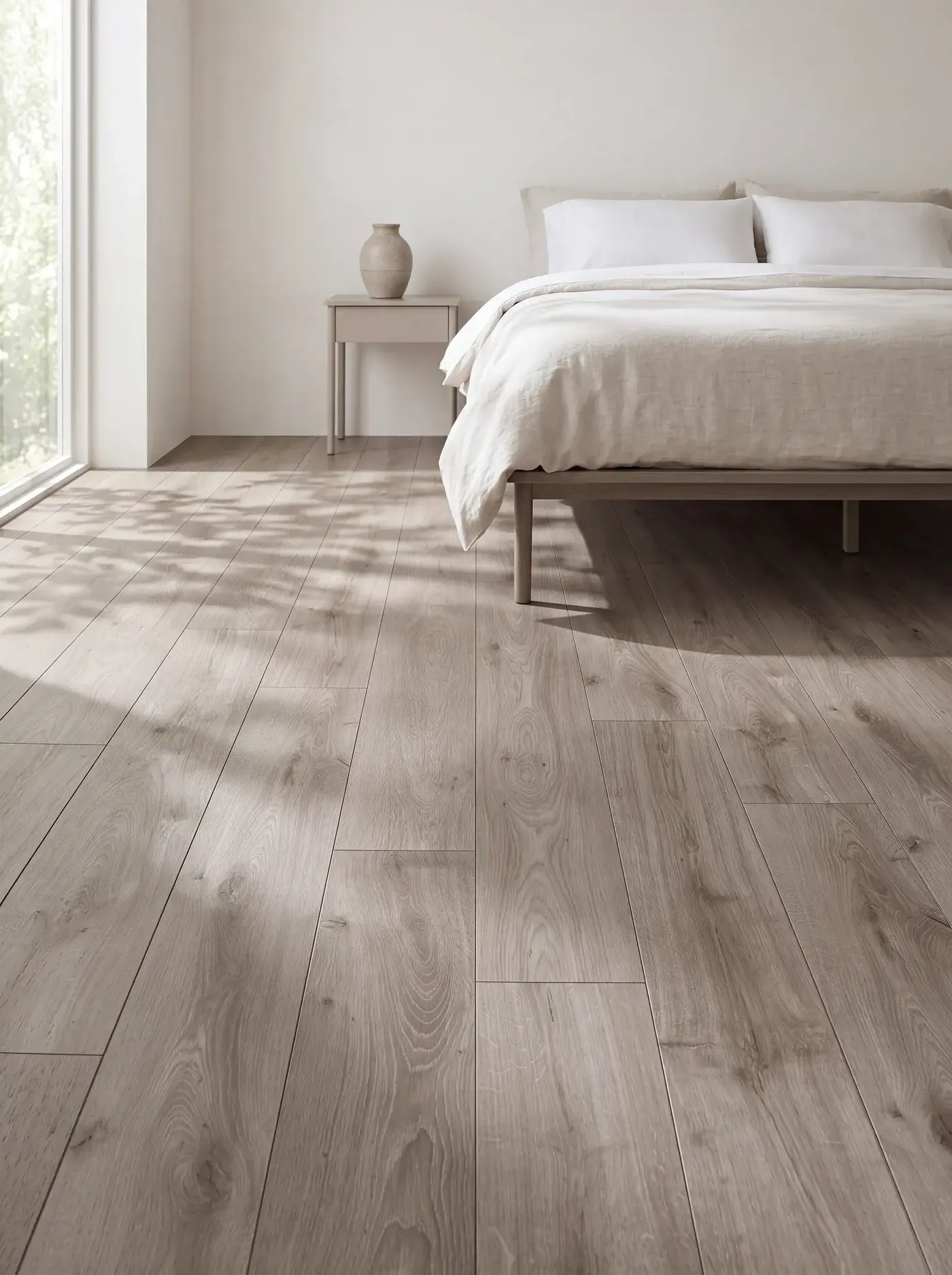
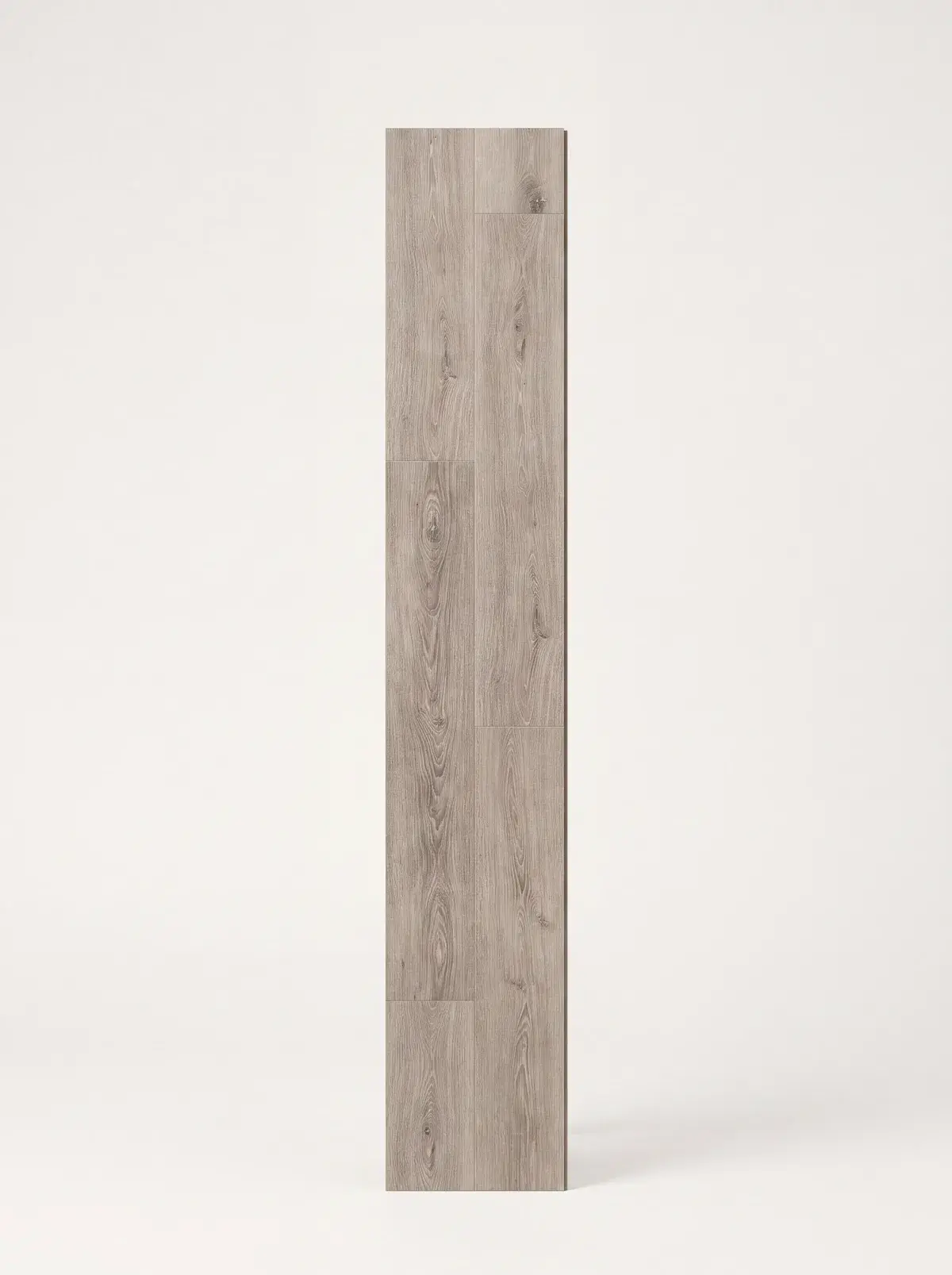
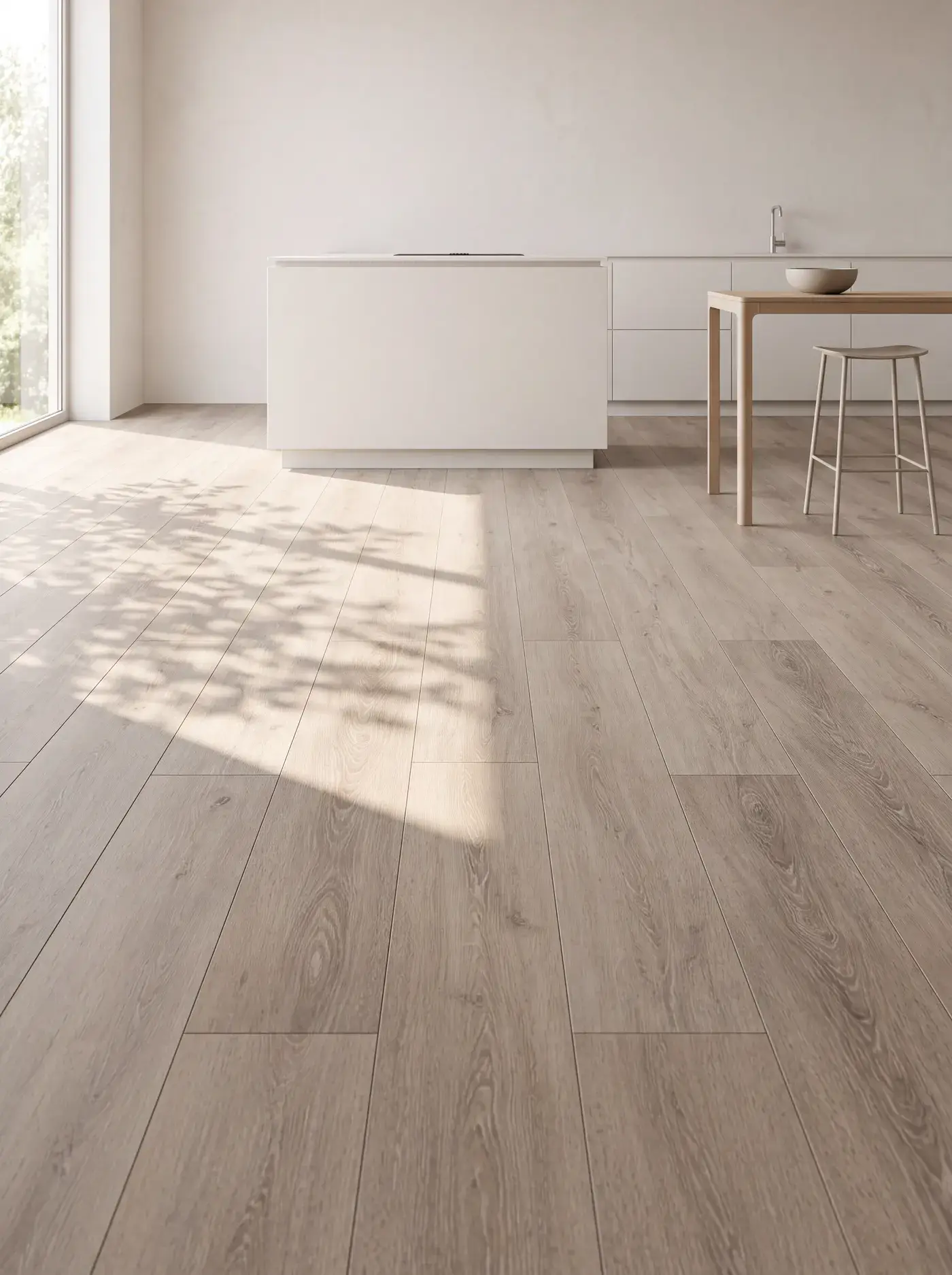
Floors that fit this guide
Browse every floor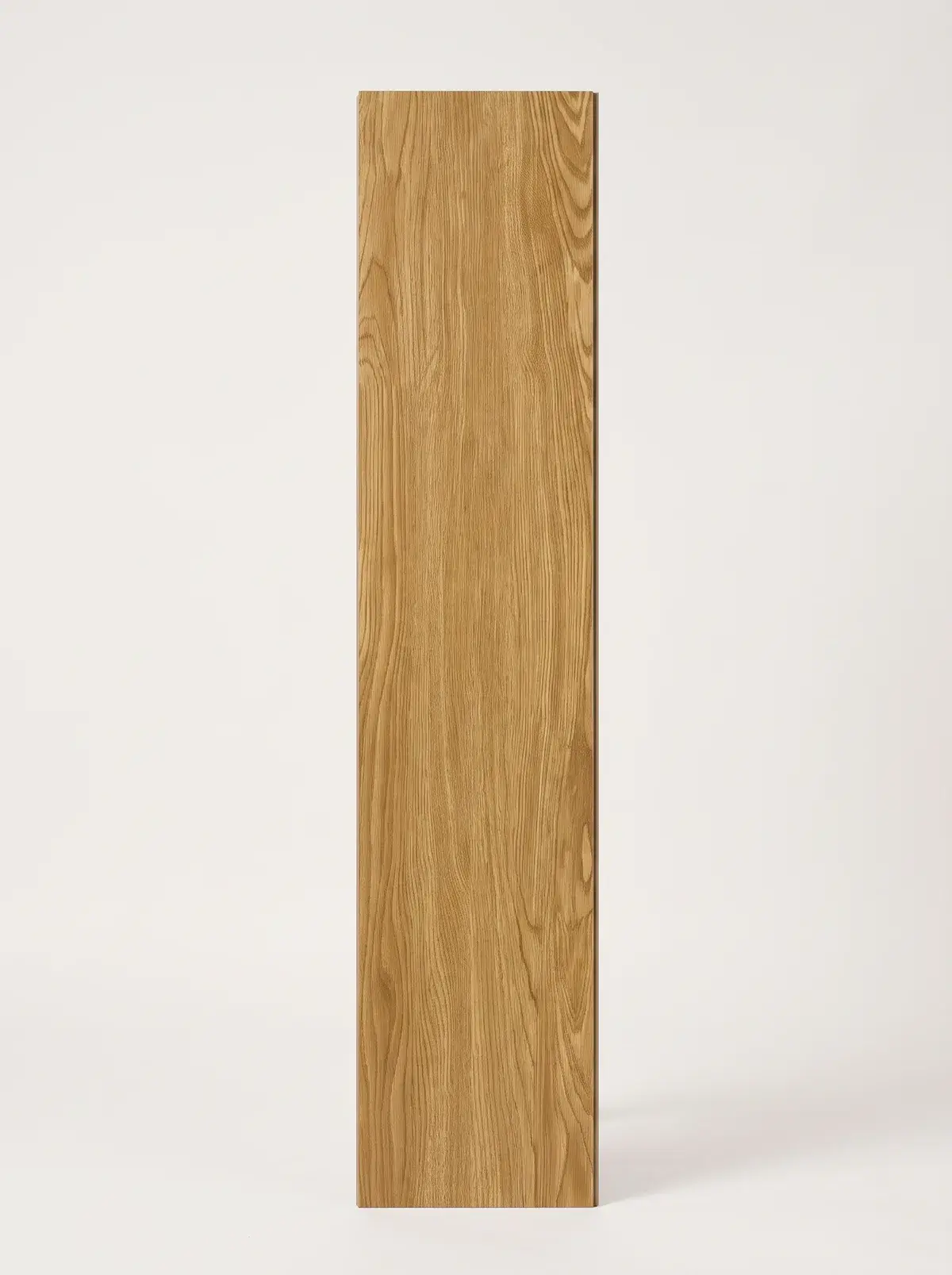
Frequently asked questions
Laminate can be the noisiest hard floor in an upstairs suite, because a fibreboard plank floating on thin foam drums against the subfloor under it. The same laminate on a dense acoustic underlay, over a level subfloor with no gaps, sounds much calmer both in the room and below it.
An acoustic underlay reduces the impact sound passing into the slab, but it does not make a suite silent and it does nothing for voices, music or a television. If a neighbour has complained about footsteps, start with the underlay your building names in its own flooring rule.
In your own room, engineered hardwood glued to the slab is the quieter of the two, because there is no cavity beneath it to drum. A floating SPC floor with an attached pad is close behind. For the suite below, the underlay and the install method decide the result.
Flooring rules usually cover the finished assembly, meaning the slab, the underlay and the plank together, so the underlay forms part of what gets approved. Ask the property manager for the current rule in writing, and whether a product data sheet has to go with the application.