Flooring Guides
Laminate vs Vinyl Plank Flooring for a Condo
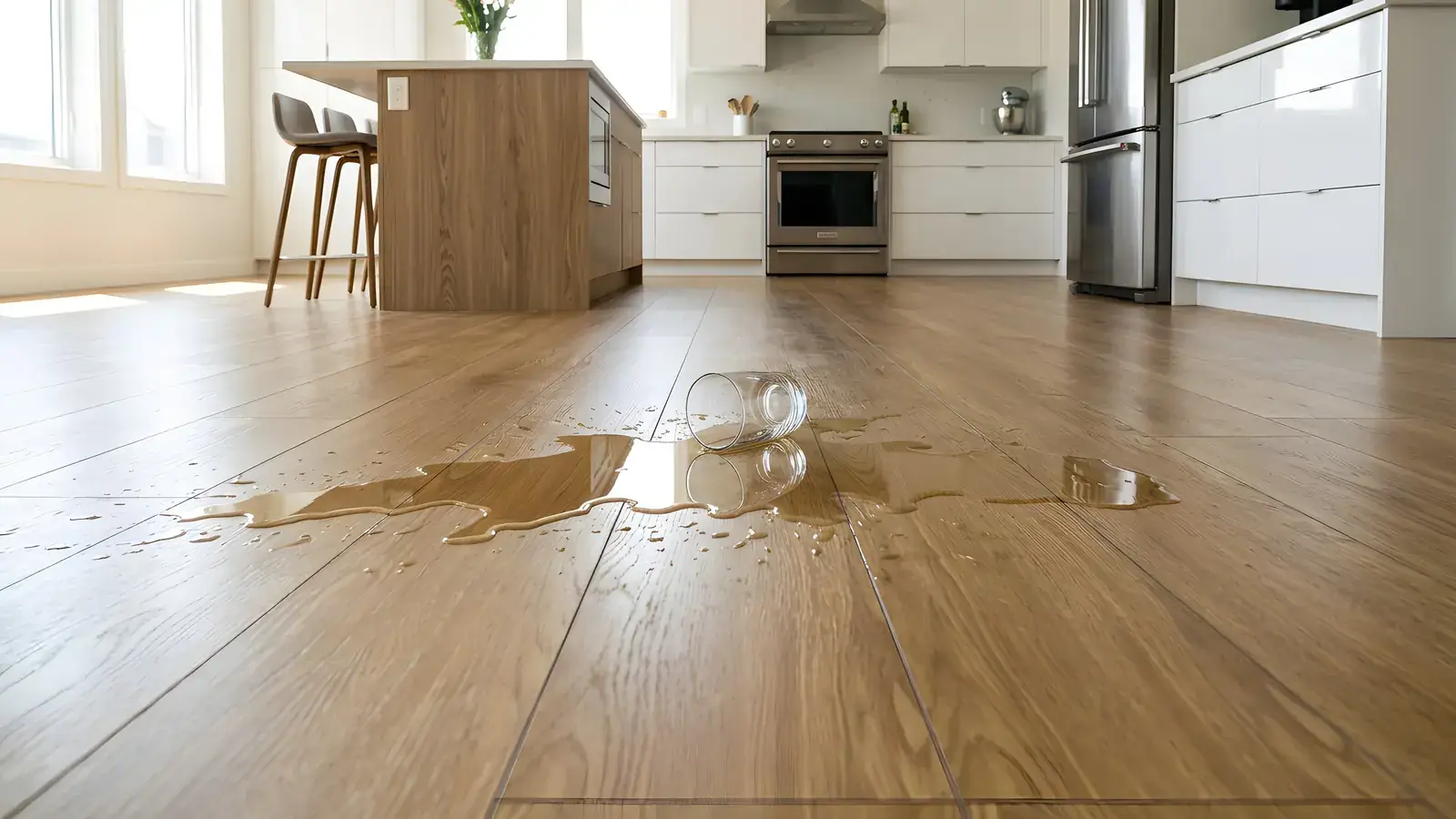
Between laminate and vinyl plank flooring, choose SPC vinyl plank for a condo kitchen, entry or any suite with a messy pet, because its core does not swell when wet. Choose AC4 laminate when the rooms stay dry and you want a warmer, more scratch resistant surface for less money. Check your building's flooring rule before either.
How do laminate and vinyl plank flooring compare in a condo?
Both float over a Toronto condo's concrete slab, so neither needs nails or glue. The differences sit in the core, the surface and what goes underneath.
| Feature | SPC vinyl plank (Marina) | AC4 laminate (Gallery, Harbour, Lakeshore) |
|---|---|---|
| Core | Stone and polymer, does not swell when wet | Pressed wood fibre under a printed wear surface |
| Water | Spills on the surface leave the core unchanged | Harbour: rated for 24 hours of surface water. Lakeshore: 72 hours. Gallery: wipe up promptly |
| Underneath | Attached pad, drop click | Separate underlay, click-lock |
| Feel | Firmer and cooler underfoot | Warmer, with a little give |
| Relative cost | Usually a little more | Usually the least of any floor we sell |
Marina and Gallery are both approved over radiant heat in the supplier data. The Marina Collection carries a 25 year residential warranty and the Gallery Collection a 35 year residential warranty. Side by side with engineered and solid hardwood, you can compare the five flooring types online.
Which handles water better, laminate or vinyl?
Vinyl plank does. SPC's stone and polymer core has no wood fibre in it, so a tipped water bowl or a dishwasher drip leaves the plank as it was. A laminate core is wood fibre pressed hard, and if water gets into the joints and stays, the edges can lift.
Water-rated laminate narrows the gap. Harbour is rated for 24 hours of surface water and Lakeshore for 72, which covers the spill nobody finds until morning. Neither rating covers water that runs to the walls. In a condo, the real risk is a supply line under the sink or a leak from the suite above, and that water can sit under any floating floor, vinyl included, until the floor comes up.
Is laminate more durable than vinyl plank?
For scratches, usually yes. Gallery, Harbour and Lakeshore are rated AC4, a wear rating for laminate surfaces that suits busy homes, and that hard melamine top shrugs off chair legs and claws better than the softer surface of vinyl. SPC carries no AC rating, because the AC scale is a laminate test.
Dents and water tell the other half of the story. A dropped cast iron pan can chip a laminate edge, and a chipped plank cannot be sanded. Vinyl copes with the water bowl but shows fine scuffs sooner. What wears either floor down fastest in a Toronto condo is grit: road salt and sand from an Ontario winter, carried in on boots and ground in under chair legs. Felt pads and a mat inside the door do more for either floor than the choice between them.
Which sounds and feels better underfoot?
Laminate feels warmer and a little softer; SPC feels firmer and cooler, which some owners notice on a winter morning in bare feet. Stand on both in socks at the Floorrable showroom in Etobicoke before you decide. The sound question has two parts: what you hear in your own suite, and what your neighbour below hears.
- In your suite. A floating floor can sound hollow under heels if the underlay is thin or the slab is not flat. Levelling the slab before install is part of a proper job, whichever floor you pick.
- For the suite below. Condo corporations in Toronto and across the GTA set the impact noise standard in their declaration, rules or flooring policy, and it applies to slab, underlay and plank together. That is why the same plank can pass in one tower and need a thicker underlay in the next.
- What changes on paper. SPC brings its pad attached, so the application lists one product. Laminate lists the plank plus whichever underlay the building accepts, which sometimes makes laminate the easier one to fit to a strict rule.
Floorrable confirms the building's acoustic requirement and the board approval before any material is ordered, so you never buy a floor the building then refuses. More on how condo approvals work.
Is vinyl plank cheaper than laminate?
Usually not. Across our catalogue, laminate is the lower priced material, and SPC sits a step above it. The gap narrows once laminate needs its separate underlay, and a building that asks for an upgraded acoustic underlay can close it further.
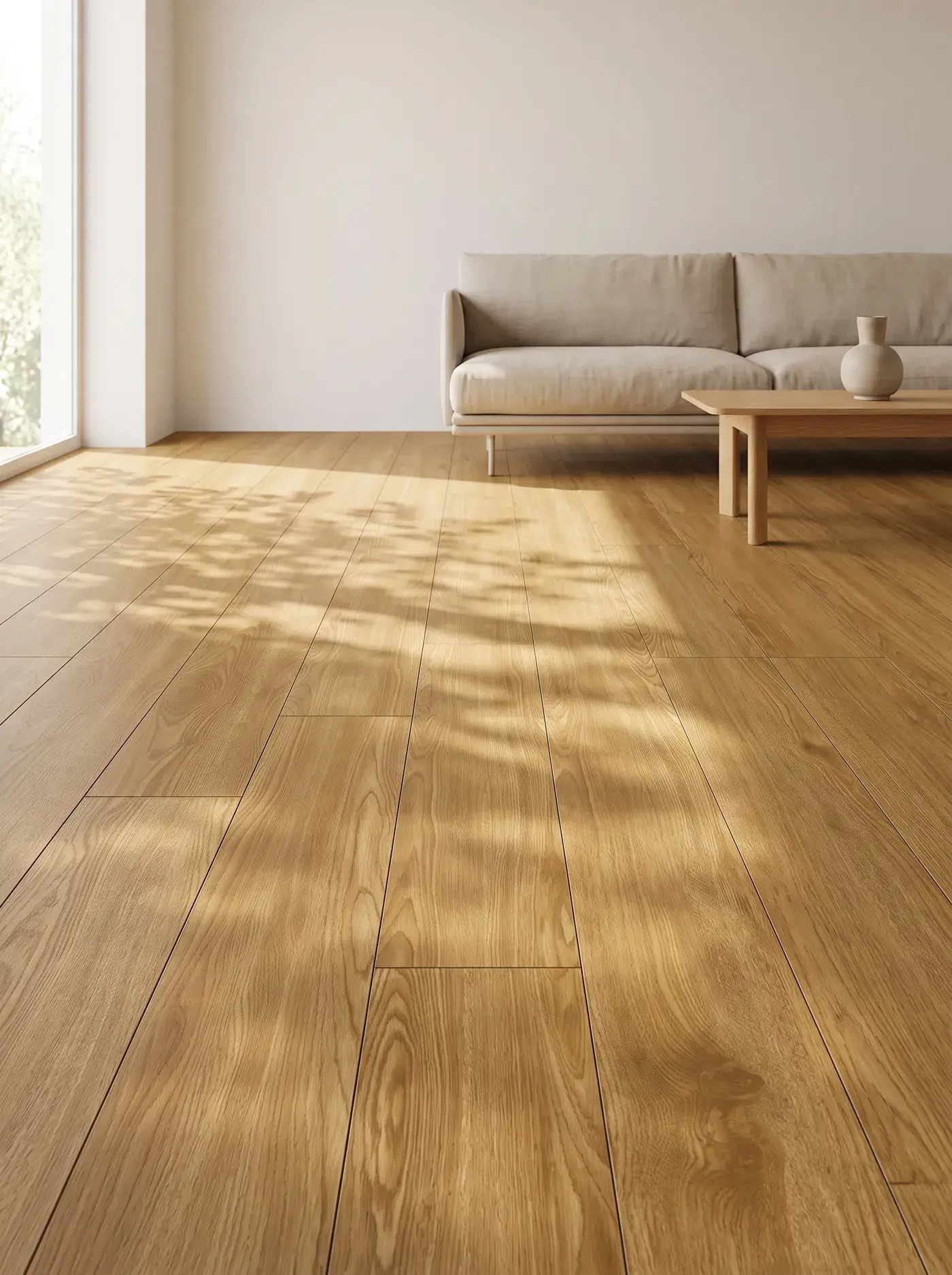
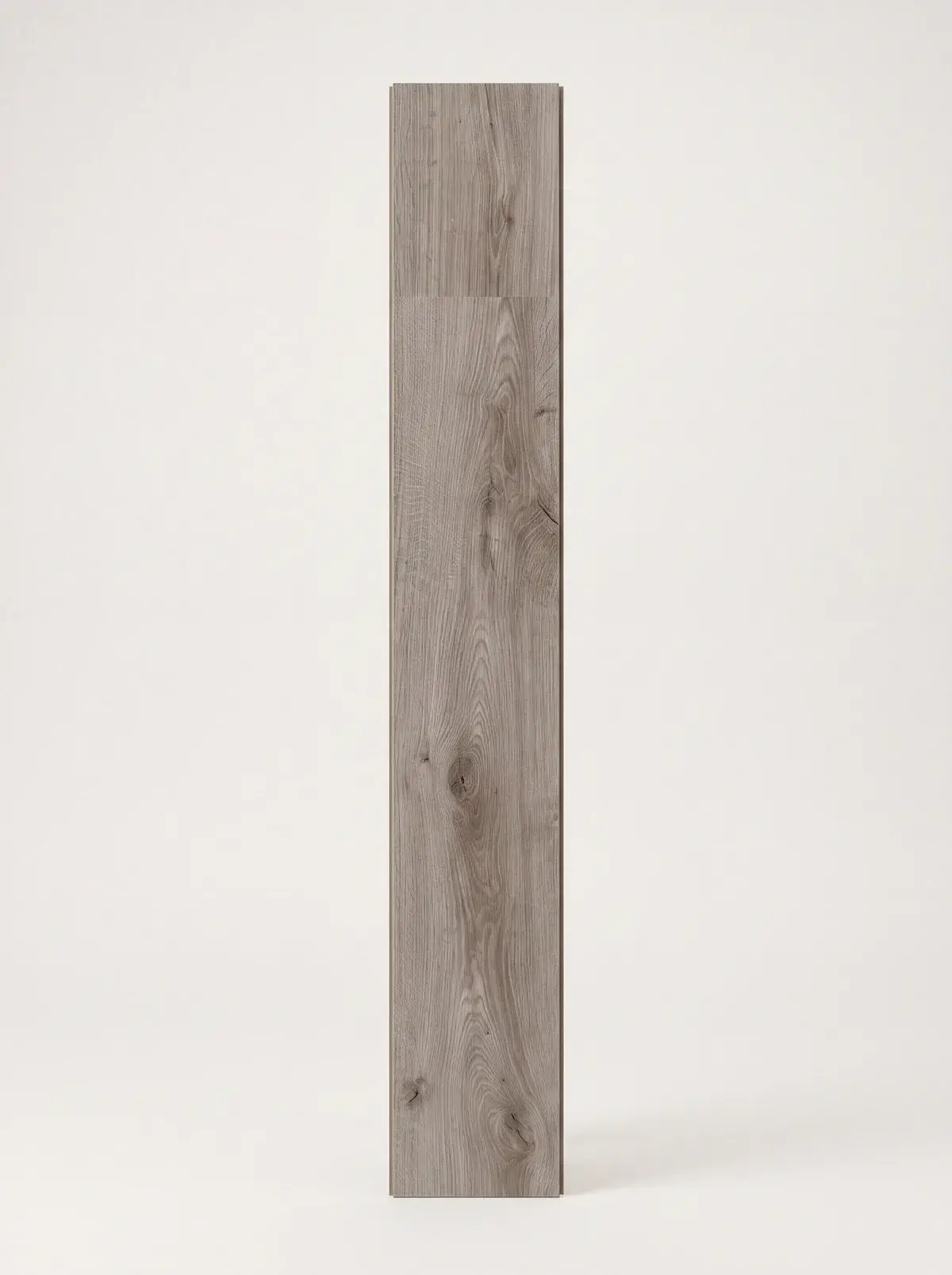
Most of the installed price comes from things that are the same for both: the square footage, what comes up first (carpet, old laminate, tile), furniture moving, and any stairs. Which looks more like real wood is a closer call than the price, as both use a printed image of wood under a clear layer, so look for grain that varies between planks rather than a pattern that repeats every few boards. Look at a full box laid out, not a single sample.
Laminate or vinyl plank: which to choose if
- Your kitchen and entry are open to the living room: SPC, or Lakeshore laminate if you want laminate's feel and accept a careful eye on spills.
- You have a dog that drinks messily or comes in wet: SPC vinyl plank floors, with felt pads and trimmed nails to limit scuffs.
- The suite is mostly dry rooms and budget leads: AC4 laminate floors, especially for bedrooms and a rental you want to hold up between tenants.
- You are not sure what your building allows: wait. The rule may decide for you.
- Ask your property management office for the flooring rule and renovation application in writing.
- Decide which room drives the choice, using the list above. If you are still split, the Floorrable room by room guide to the best flooring for a Toronto condo goes further.
- Then get a price range for your unit in about two minutes. A free measurement turns it into a firm price, and the building check happens before anything is ordered.
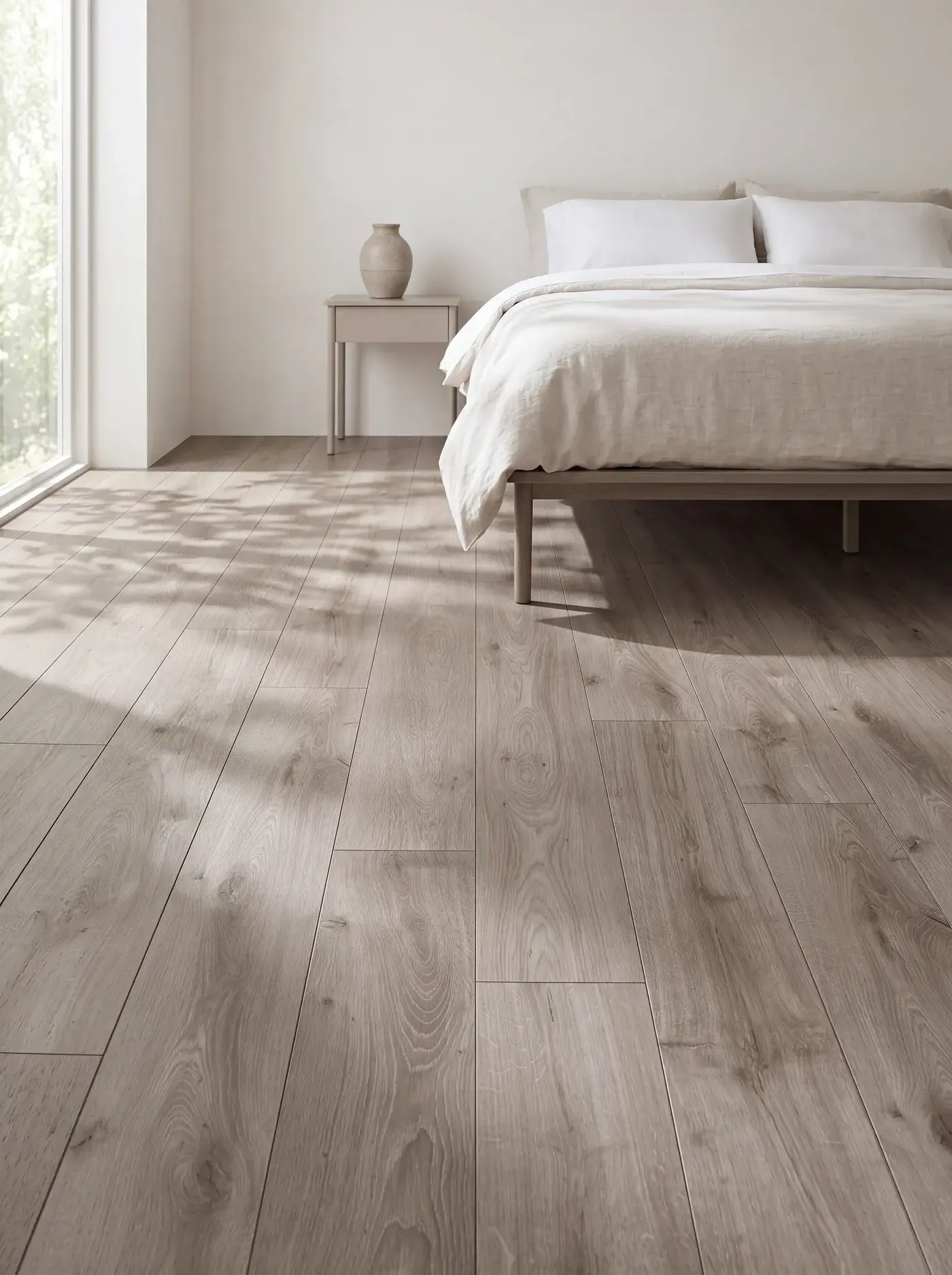
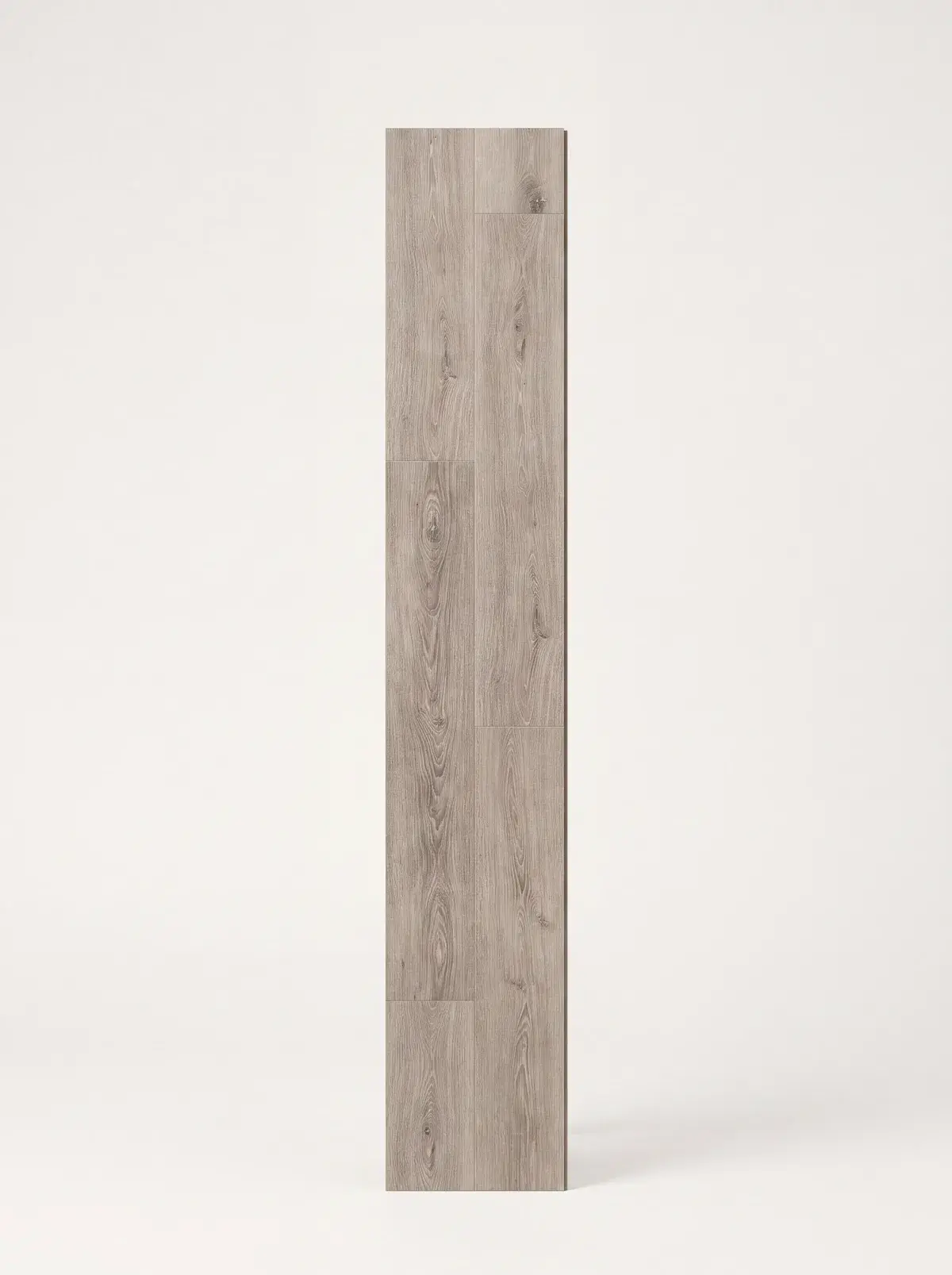
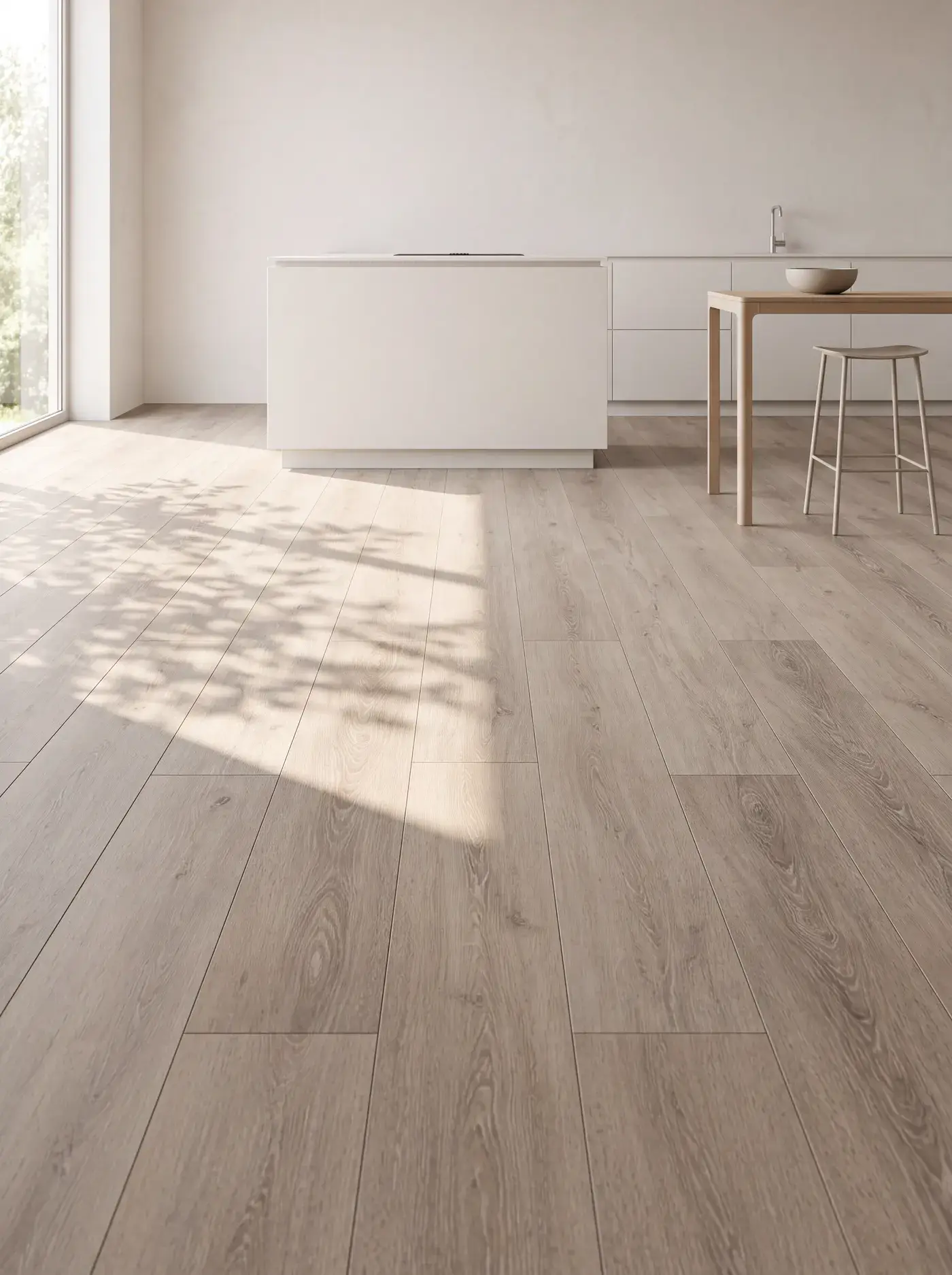
Floors that fit this guide
Browse every floor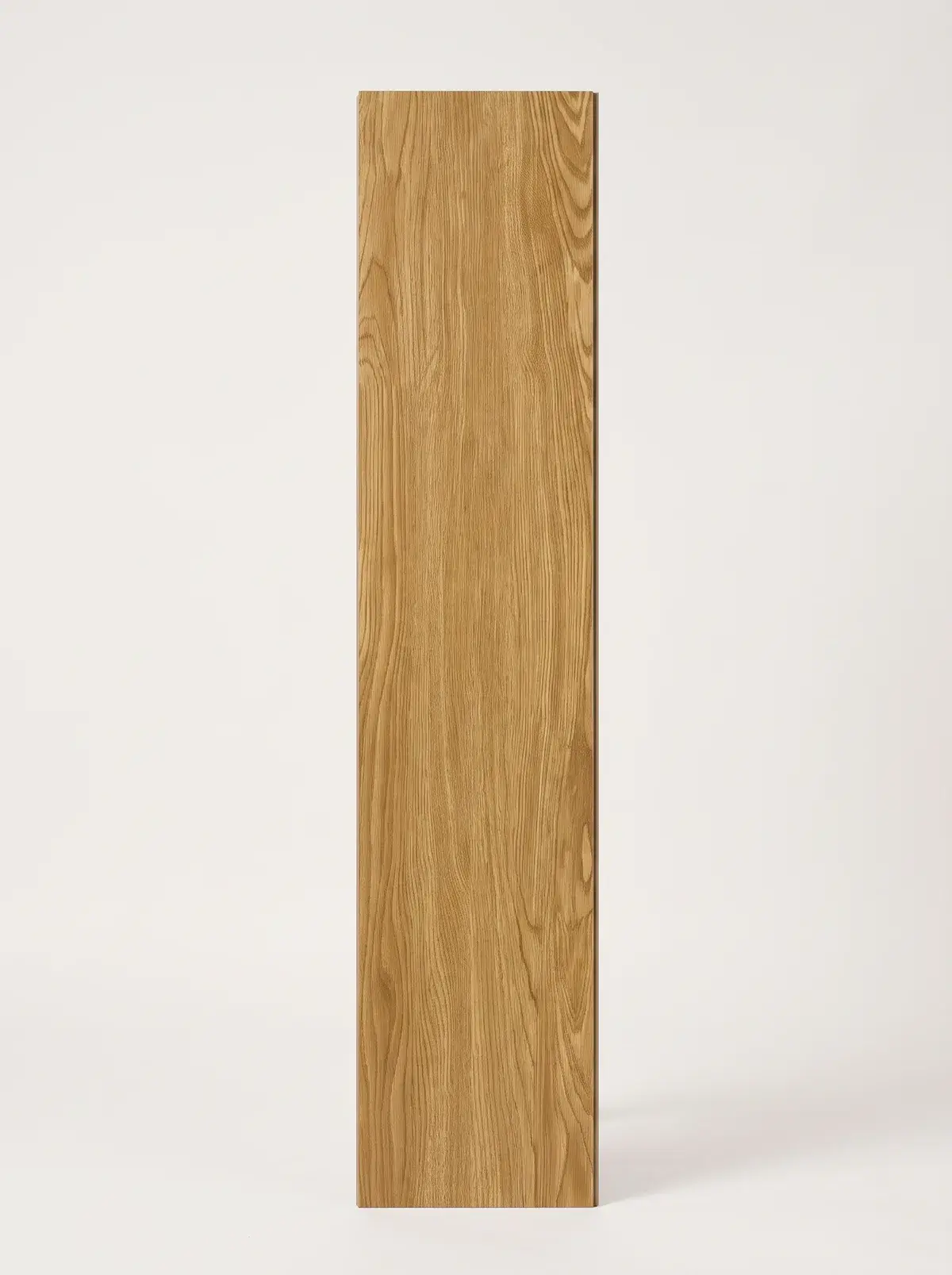
Frequently asked questions
Vinyl plank is the better condo floor where water is likely, such as an open kitchen, the entry or a home with pets, because SPC's core does not swell when wet. Laminate is better for dry rooms when scratch resistance, a warmer feel and a lower price matter more.
Laminate can go in a condo kitchen if it carries a water rating and spills are wiped up. Lakeshore laminate is rated for 72 hours of surface water and Harbour for 24. A leak that runs under the cabinets is still a risk for any floating floor, so a plain laminate belongs in drier rooms.
Marina SPC has its pad attached, so on a flat concrete slab it usually goes down without a separate layer. A condo building can still require a specific acoustic underlay for the finished assembly, so the building's written flooring rule decides whether anything extra goes underneath.
Neither is quieter by type alone. The noise reaching the suite below depends on the slab, the underlay and the plank together, which is why Toronto condo buildings set their standard for the whole assembly. The underlay the building accepts matters more than the choice of laminate or vinyl.