Flooring Guides
Engineered Hardwood in a Toronto Condo: Allowed?
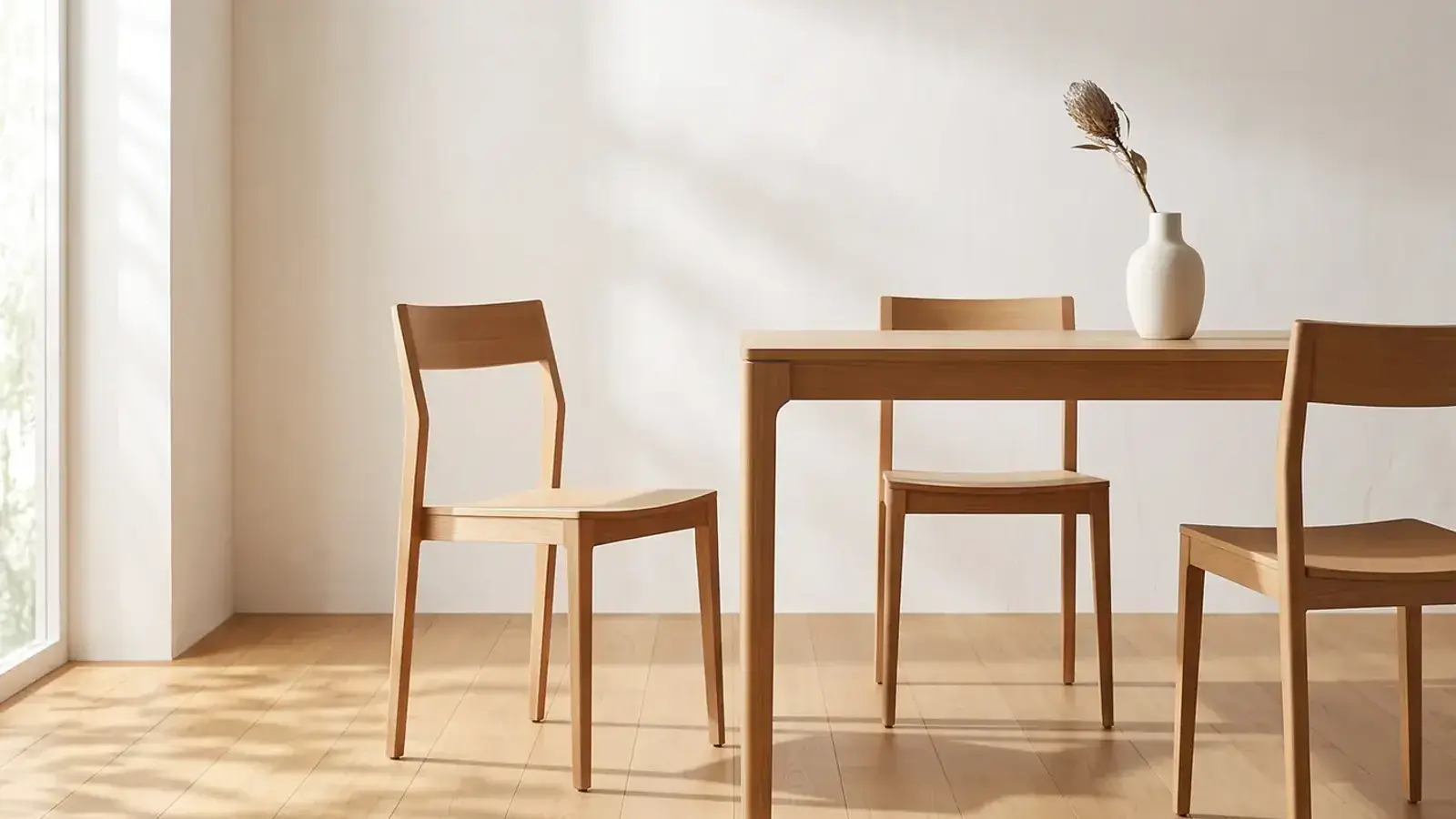
Engineered hardwood goes into plenty of Toronto condos. Whether it goes into yours is a question for the corporation's flooring rule, because the board sets a standard for the finished floor rather than for the plank. On a concrete slab the wood is glued down or nailed to a built-up subfloor. Get the rule in writing before you shop.
Is engineered hardwood allowed in Toronto condos?
Usually, with approval. What a board judges is the finished assembly over the slab, meaning the plank, whatever lies under it and the way the two are fixed down, so the same wood can be accepted in one building and sent back in the next. The requirement comes from the corporation's declaration, by-laws and rules, which the property management office can give you in writing. Condo flooring and building approvals covers what the application holds.
Read the acoustic clause closely. A glued floor and a floating floor answer it in different ways, and that is the part of the rule that decides your install method.
Floating or glued down on a concrete slab?
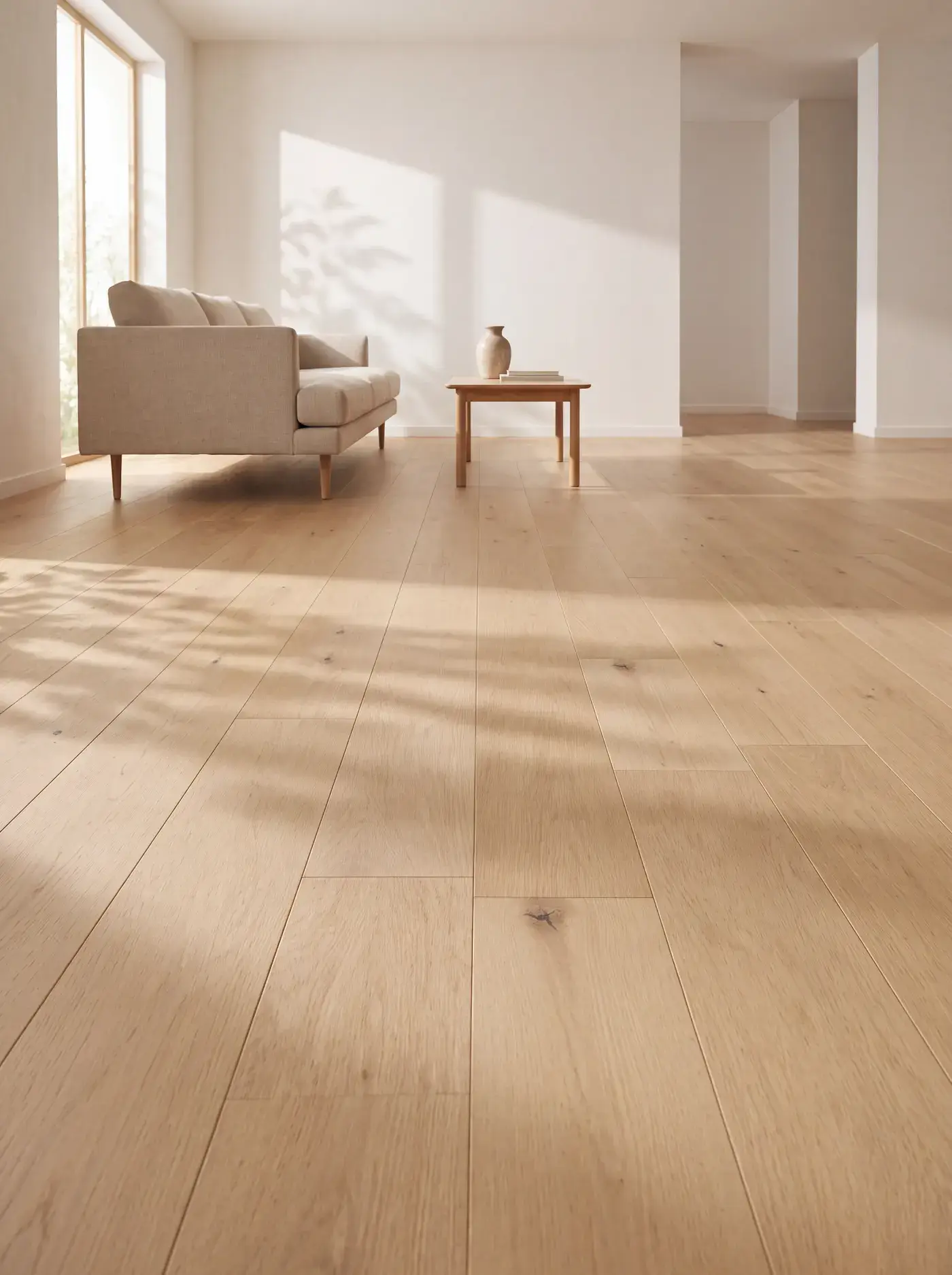
Over a slab, a wood floor is bonded to the concrete with an adhesive or nailed to plywood fixed over it first. The engineered hardwood options Floorrable carries, the Kingsway and Atelier collections, are nail down or glue down, and the Metro hybrid engineered line goes down the same two ways. A click-together wood floor that floats is not one of the choices here.
| Method | What it needs | The trade-off |
|---|---|---|
| Glue down | A flat, dry, clean slab and an adhesive rated for the floor | No cavity underfoot, and taking it up later means scraping |
| Nail to plywood | Plywood fixed over the slab first | Raises the finished height at doors and thresholds |
| Floating click floor | An underlay the building accepts | What laminate and SPC do, and not an option on these wood lines |
Slab flatness matters more than people expect. Condo slabs across the GTA are poured to a construction tolerance rather than a flooring one, and adhesive wants the surface inside the manufacturer's limits before anything is spread. That gets measured in the suite at the free measurement, not guessed at in a showroom.
What marks a wood floor in daily use?
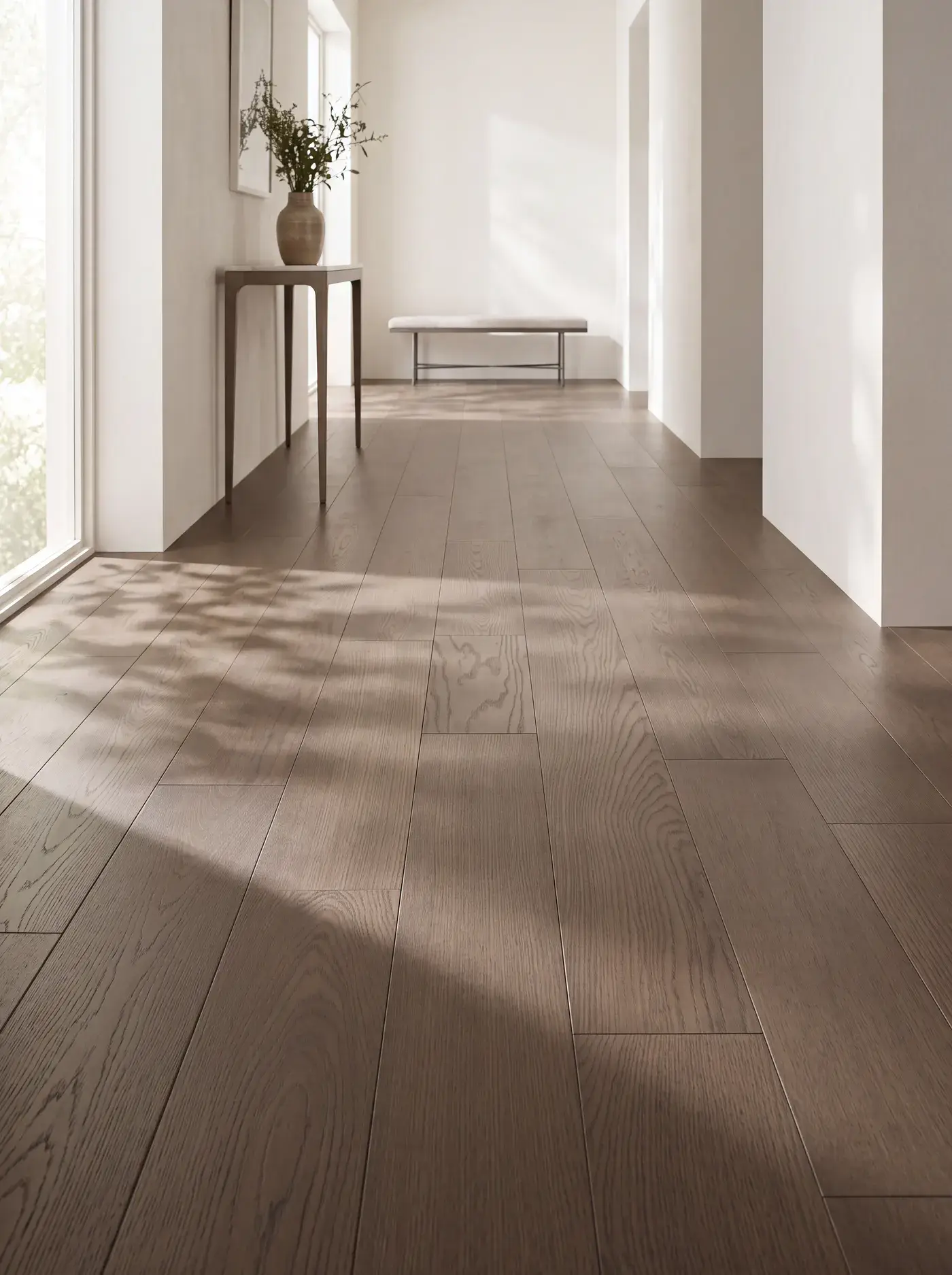
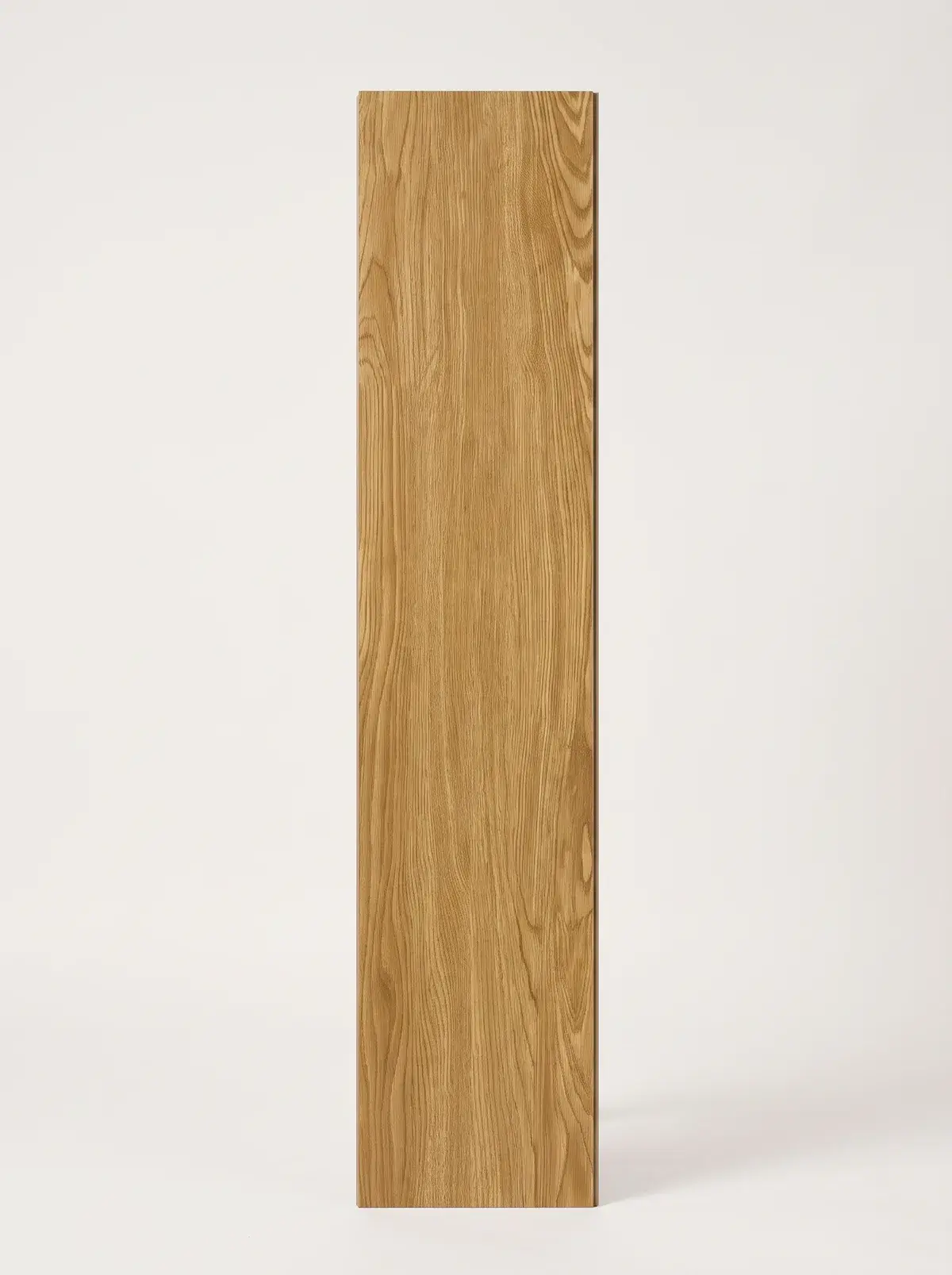
Wood dents, and in a condo the damage arrives at the door. Grit off the sidewalk, road salt in February, a chair leg with no felt pad and the occasional dropped pan all leave their mark on a real wood surface. The Kingsway engineered collection is character-graded, and a surface with that much grain movement in it carries a scuff better than a flat, even one.
A mat inside the entry and felt pads under every chair do more for a wood floor than any finish on the market.
Dry winters and a condo's heating
Wood moves with the air around it. A suite with forced air heat and sealed windows runs dry through an Ontario winter and humid in July, and the plank answers by shrinking and swelling across its width. Fine gaps that open at the ends of a cold February and close again by summer are the floor behaving normally.
Hold the suite in a steady humidity range and most of that movement goes away. The manufacturer's instructions set how the material is acclimated before it is laid and the conditions the residential warranty expects afterwards, and Floorrable orders and acclimates to those instructions rather than to a rule of thumb.
Is engineered hardwood good for a condo kitchen?
In a suite where the kitchen opens onto the living room, one floor running through both usually beats a change of material at the counter line, so the real question is what happens when the dishwasher leaks. Engineered hardwood is a layer of real wood over a stable core, and standing water will mark it. Keep a mat at the sink, wipe spills, and if the suite has a history of water, run SPC through the kitchen instead and accept the join. How it compares with vinyl plank sets the two side by side.
Can engineered hardwood be refinished?
Sometimes, and the wear layer decides it. That is the thickness of real wood above the core, and it sets whether a floor can be sanded at all and how often, so ask for the figure on the line you are considering instead of assuming. Solid hardwood, the Estate Collection, is the floor that sands back repeatedly, which keeps it the choice in a house with joists under it.
Refinishing also empties the suite for days, which is a harder thing to arrange in a one-bedroom on the fourteenth floor than in a house. For most condo owners the practical lifespan of the floor is the finish on it, not the wood underneath.
Who should choose it, and who should not
- Choose it if you want real wood underfoot, the rule allows a glued or nailed floor, and the suite is kept at a steady humidity.
- Choose it if you are staying a while, because this is a floor you feel every day rather than a line in a turnover budget.
- Think again if the suite turns over between tenants, where SPC takes the churn with less care.
- Think again if the slab needs serious levelling, or the door heights leave no room for plywood underneath.
- Get the building's flooring rule and its acoustic requirement from the property manager, in writing.
- Ask whether the plank you like is approved for glue down over concrete, and what wear layer it carries.
- Have the slab checked for flatness and moisture before the adhesive or the subfloor is decided.
- Then get a price range for your unit, and the free measurement confirms the subfloor before any wood is ordered.
Floors that fit this guide
Browse every floor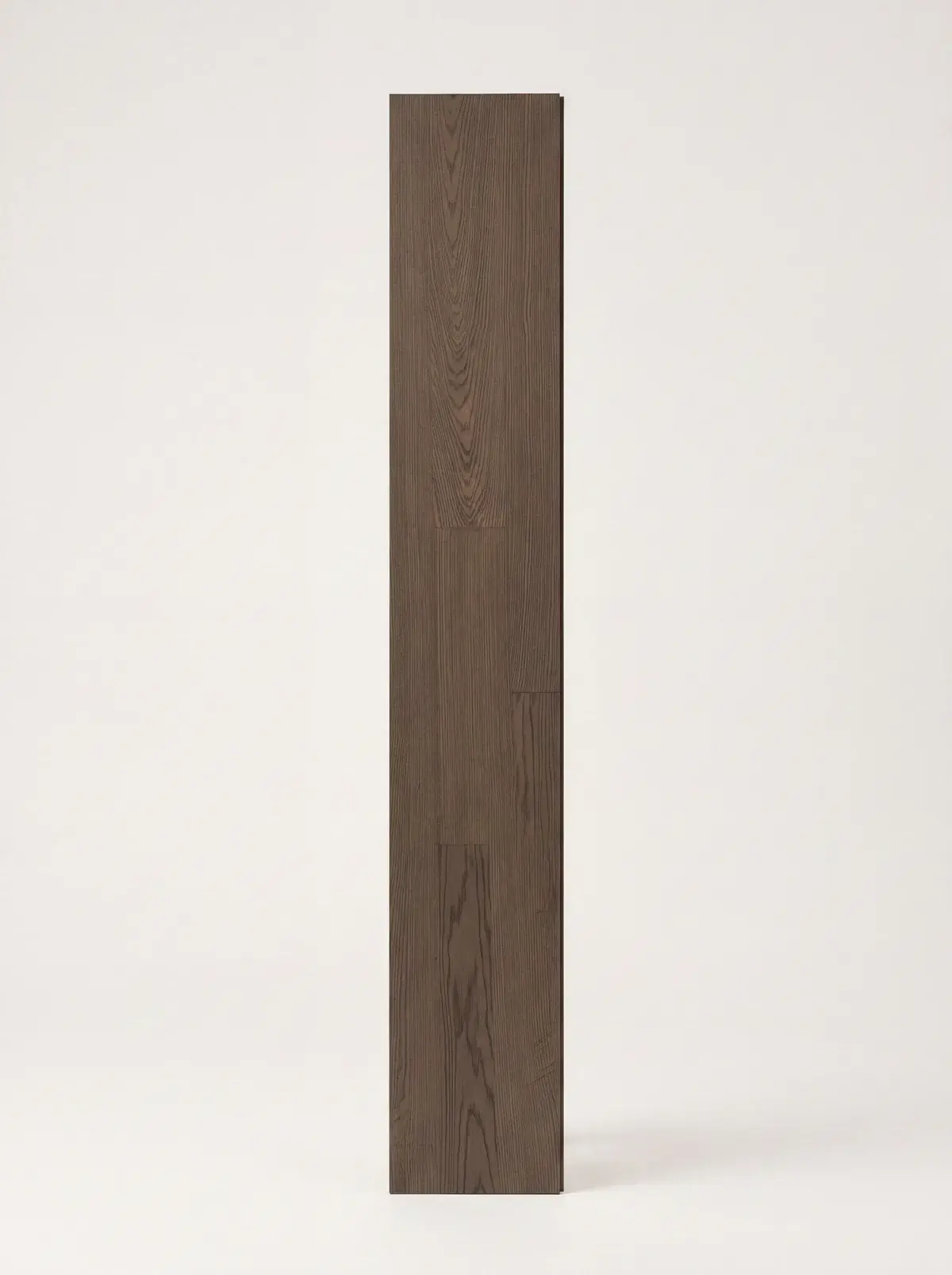
Frequently asked questions
Yes, in most buildings, once the corporation approves the application. The rule covers the finished floor over the slab, so it is the assembly of plank and underlay that gets judged, not the species. Ask the property management office for the current flooring rule before you choose anything.
It depends on the install method and the building's rule. A glued engineered floor has no underlay at all, because the adhesive bonds it to the slab, so an acoustic requirement is met with a membrane instead. Ask management which products the building accepts under wood.
It is worth it if you are staying and want real wood underfoot, because the warmth and the grain are what you notice daily in a small space. In a suite that turns over between tenants, SPC vinyl costs less and handles the churn with less care.
That depends on the wear layer, the thickness of real wood above the core, and some engineered floors cannot be sanded at all. Ask for the figure on the specific line before you count on refinishing, and remember that sanding means emptying the suite for several days.