Flooring Guides
Waterproof Laminate or SPC Vinyl Plank in a Condo?

Waterproof laminate and SPC vinyl plank are both rigid click floors, and neither is immune to water once it reaches the subfloor. Choose SPC for a kitchen, an entry or a laundry, because its stone and polymer core does not swell. Choose laminate for dry rooms at a lower price. Read the water rating on the line you are buying.
What does waterproof mean on a laminate or vinyl plank box?
It means two different things, and the box rarely says which. On laminate it is a time limit on surface water. The Harbour line carries a 24 hour rating and the Lakeshore line a 72 hour rating, and both describe water sitting on top of a finished floor and wiped up inside that window. On SPC the word describes the core instead: stone and polymer do not take up water the way a fibreboard core does, so the plank will not swell.
Neither statement covers the seams. A click joint is a mechanical fit, not a seal, and the perimeter gap at the wall is deliberately open so a floating floor can move. Water that runs to the edge of a room goes under the planks, where nobody sees it and nothing dries quickly.
So read the warranty rather than the front of the box. Ask what the rating was measured on, how long the water may sit, and whether the claim still holds over the underlay your building named instead of the one the manufacturer names. Compare the five flooring types puts the categories next to each other.
| What to check | AC4 laminate | SPC vinyl |
|---|---|---|
| Core | High density fibreboard | Stone and polymer, with a pad attached on the Marina line |
| What the water claim covers | A stated surface water time: 24 hours on Harbour, 72 on Lakeshore | The core itself, which does not swell when wet |
| How it goes down | Click-lock floating over an underlay | Floating drop click, pad already attached |
| Underfoot | Harder, and brighter sounding over a slab | Firmer and cooler, quieter where the pad is attached |
| Over radiant heat | Approved on the Gallery line | Approved on the Marina line |
| Published abrasion rating | AC4 on Gallery, Harbour and Lakeshore | None in the supplier data |
How the two cores behave when water gets under the floor
The difference shows after the spill, not during it. A fibreboard core that takes on water swells at the edges and does not come back, so the joint between two laminate planks lifts and stays lifted. That is why the laminate ratings are written in hours. They describe how long you have, not what the plank can live in.
An SPC plank in the same puddle keeps its shape. The core is stone and polymer, so it will not swell, but the floor is still a floating assembly sitting on a slab, and the water underneath has nowhere to go. In a condo it can reach the ceiling of the suite below before anyone upstairs notices.
The response is the same for both floors. Wipe it up, lift the planks at the wall if a lot of water went down, dry the slab, and relay them. A dishwasher that drips is a problem you can manage on either floor. A supply line that lets go overnight is an insurance matter, and replacing a floor after a condo leak covers how that job runs.
Which feels harder, and which sounds quieter?
Laminate is the harder surface and the brighter floor. Its wear layer is dense, which is what the AC4 rating measures, and a click-lock laminate on a thin underlay over concrete can sound hollow under a heel. AC4 laminate floors covers the Gallery, Harbour and Lakeshore lines.
SPC is firmer and cooler to stand on, and quieter over a slab where the pad is already attached. The Marina Collection comes that way, and SPC vinyl plank floors sets out how it goes down. Neither floor is a soundproofing product. A corporation's impact requirement applies to the finished assembly of slab, underlay and plank, never to the plank on its own.
On wear, compare what you can check. The laminate lines carry a published abrasion rating of AC4. The SPC line has no AC rating in the supplier data, so judge it on the core, the attached pad and the warranty, which runs 25 years residential on Marina. Felt pads under the chair legs, and a mat at the entry to catch grit, protect either floor better than any line on a spec sheet.
What does a Toronto condo rule change about the choice?
It can settle the question before you do.
Toronto condo corporations set their own flooring requirements. Under the order of precedence the Condominium Authority of Ontario publishes, a requirement can sit in the declaration, in a by-law or in a rule, with the Condominium Act above all three.
Many corporations name an underlay rather than a floor. A rule that calls for a separate acoustic underlay of a stated type cancels the main convenience of an SPC plank with a pad attached, because the pad does not count and another layer goes beneath it.
The extra layer also changes the height. Your doors were hung to the floor level the builder left, so a thicker assembly shows at the door sweep first and at the balcony track second. Getting the requirement in writing is the step that stops a pallet of the wrong plank arriving. Condo flooring and building approvals covers what the application holds.
Which one to choose, room by room
Pick by the wettest room the floor has to cross, because in most suites one floor runs through everything but the bathroom.
- A kitchen, an entry or a laundry in the run: SPC, for the core that does not swell.
- Bedrooms and a living room with no water in them: laminate, for the lower price and the AC4 surface.
- A building rule that names a separate underlay: either floor, once the underlay is the one the rule names.
- A rental suite turning over between tenants: SPC, because the entry and the kitchen take the hardest use.
- A room with hydronic radiant heat underneath: Gallery laminate or Marina SPC, both of which are approved over it.
Handling both planks for a minute usually settles it faster than reading two spec sheets. Once you know which rooms the floor has to survive, get a price range for your unit. The measurement that follows turns that range into a firm price, with waste and preparation in it.
Floors that fit this guide
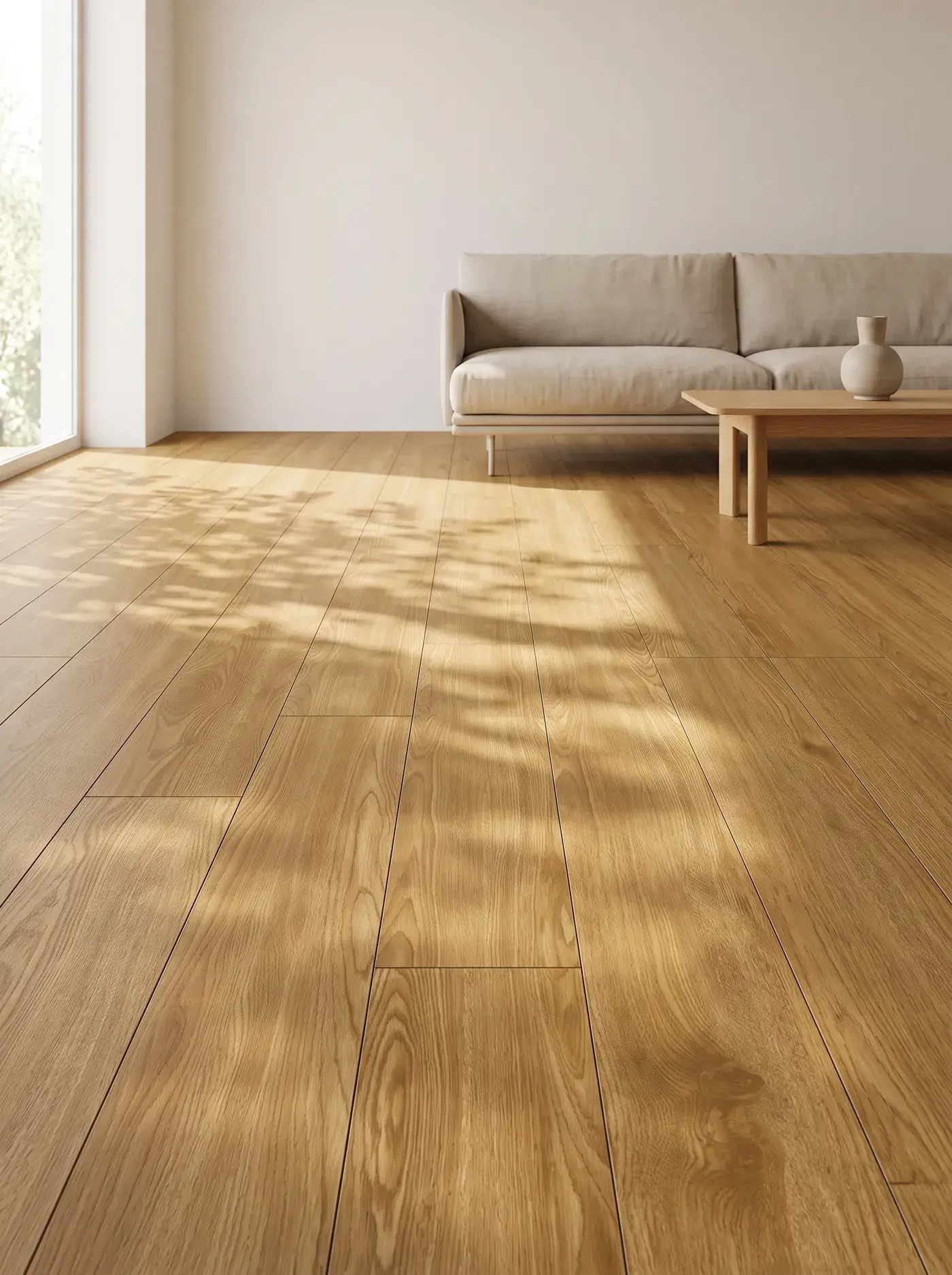
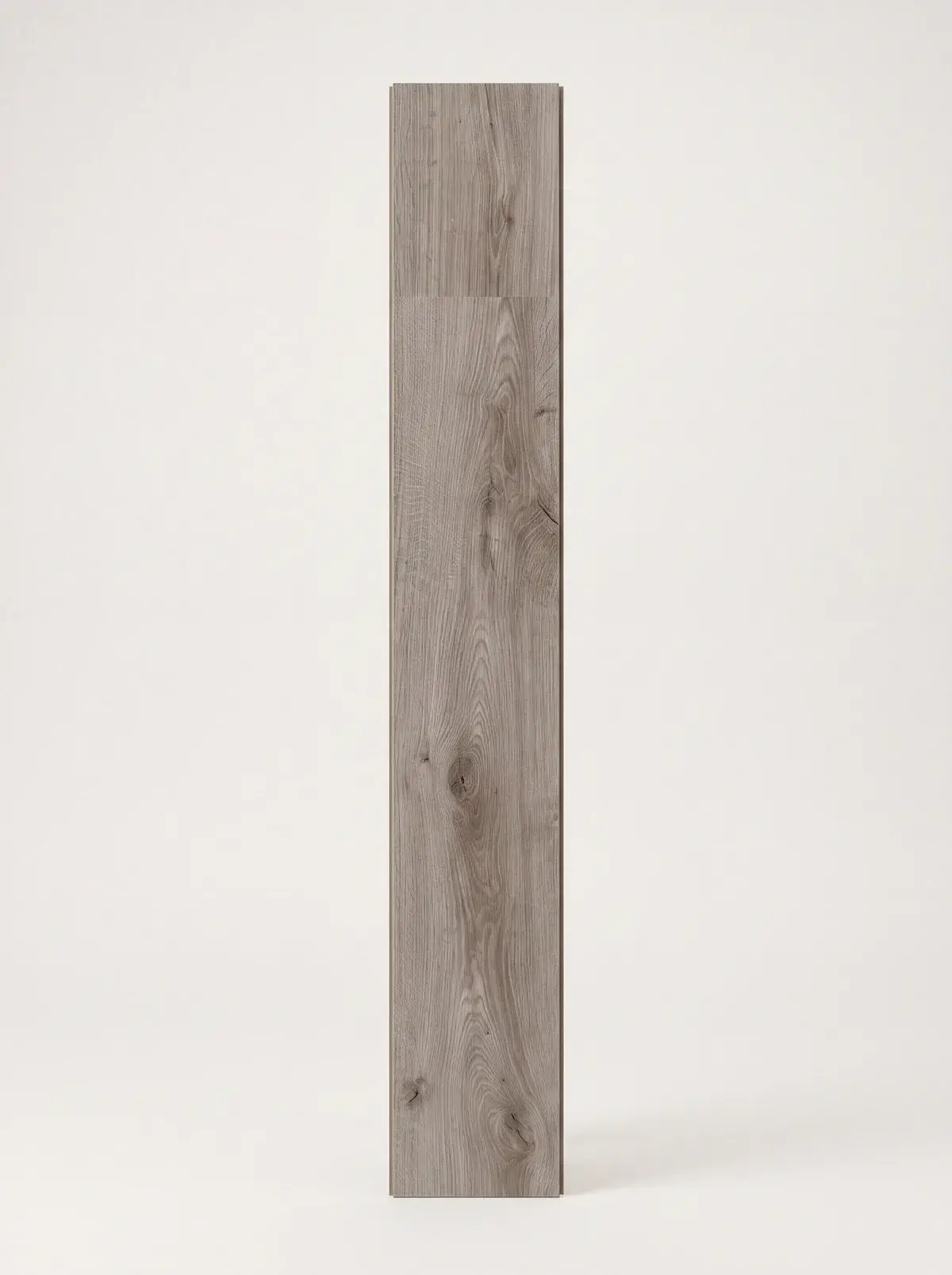
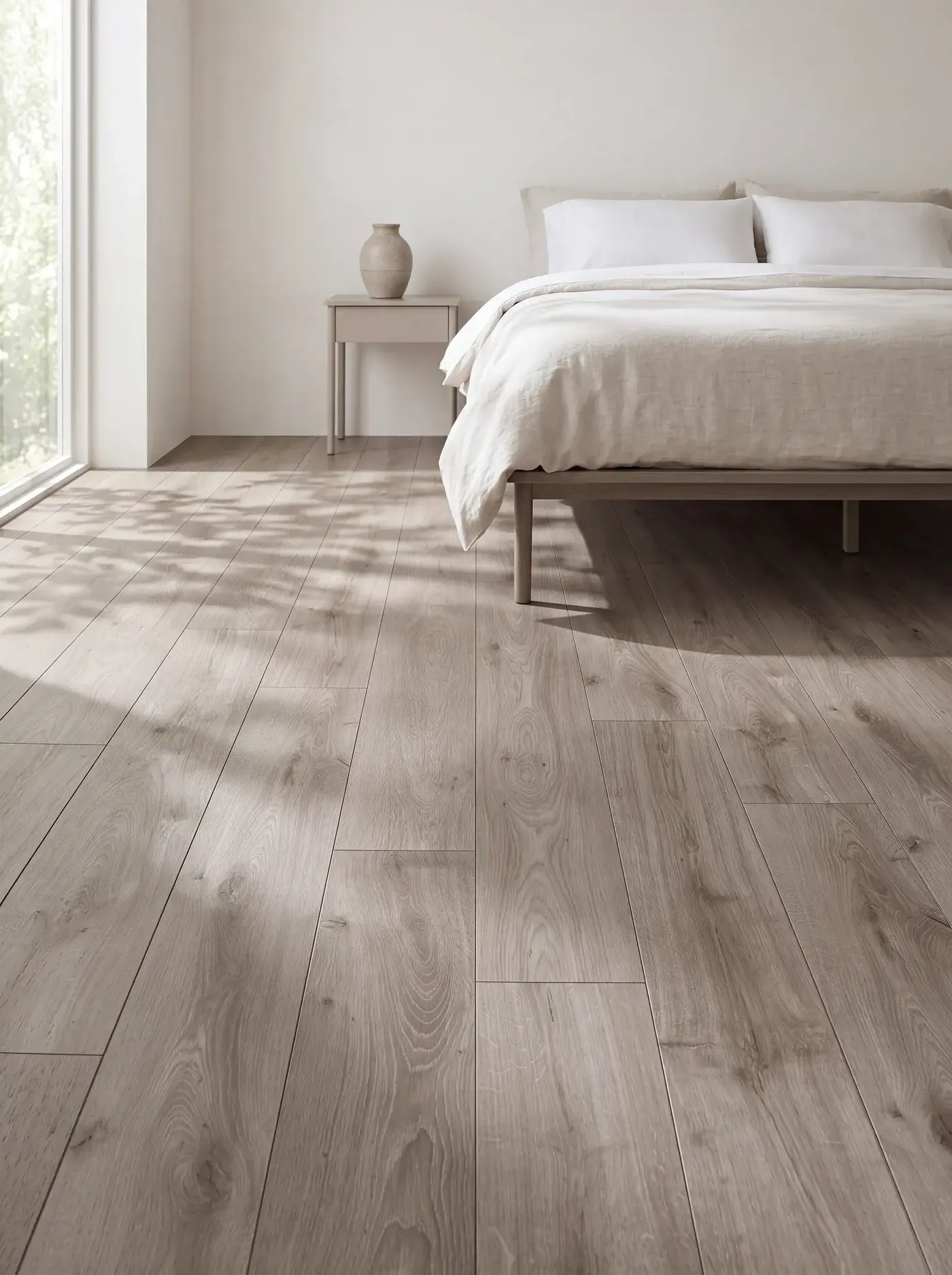
Browse every floor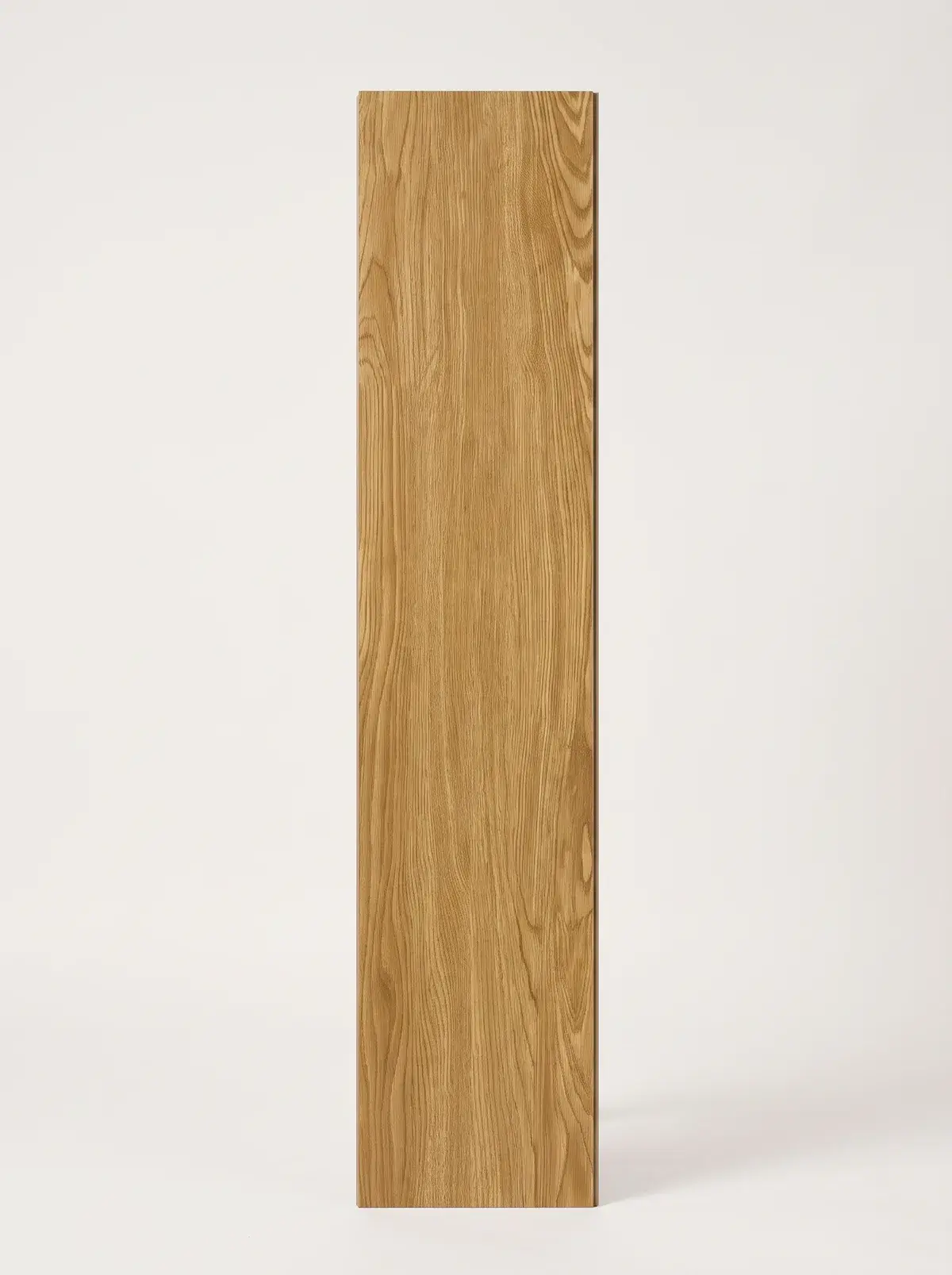
Frequently asked questions
Only as long as the line's own rating allows, and that rating describes water on the surface. Harbour is rated to 24 hours and Lakeshore to 72. Water that reaches the perimeter gap and runs under the planks sits outside any of those numbers.
In dry rooms, yes, and it usually costs less. For a kitchen, an entry or a laundry, SPC is the safer core, because stone and polymer do not swell when wet while a fibreboard core does. The rooms the floor crosses decide it.
The surface and the plank, rather than the installation. A stated number of hours describes water sitting on a finished floor and wiped up inside that window. Click joints are a mechanical fit and not a seal, so water reaching the wall gap runs underneath.
A floating floor can be lifted and relaid, which is the advantage of a click system in a condo. Planks at the edge come out, the slab dries, and sound planks go back down. Swollen laminate edges do not recover, so those pieces are replaced.